

NEWS
ZJU Ocean College Hosts Qiushi Mentor School and Chengzhang Series Training Programme
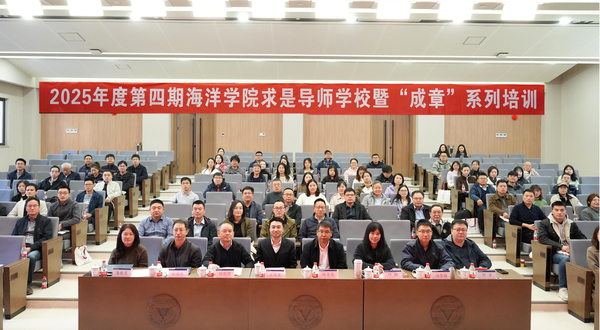
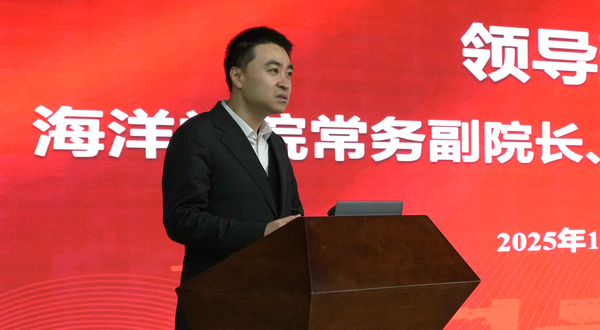
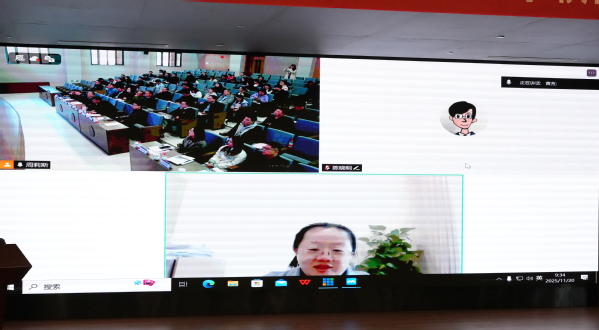
On 20 November, ZJU Ocean College convened its fourth Qiushi Mentor School and Chengzhang Series training session for 2025 at the Zhoushan Campus. This instalment focused on deepening industry-academia integration for professional degree postgraduates and fostering effective mentor-student relationships, targeting all academic supervisors, industry mentors, and relevant teaching administrators within the School. Executive Vice Dean and Deputy Party Secretary Qu Fengzhong, alongside Deputy Party Secretary and Discipline Inspection Commission Secretary Fu Huijun, attended and addressed the event.
Fengzhong QU emphasised that the ZJU Ocean College remains steadfastly aligned with the strategic requirements of China's maritime power initiative, committed to cultivating a mentor cohort distinguished by both political integrity and professional excellence. He urged all mentors to uphold their foundational commitment to education, strengthen their sense of responsibility, refine their pedagogical skills to enhance training quality, and deepen collaborative partnerships to advance industry-education integration. Fu Huijun expressed his hope that all supervisors would conscientiously implement the training outcomes, remain steadfast in their commitment to nurturing talent, continuously deepen industry-education collaboration, and foster harmonious mentor-student relationships to propel the school's postgraduate training to new heights.
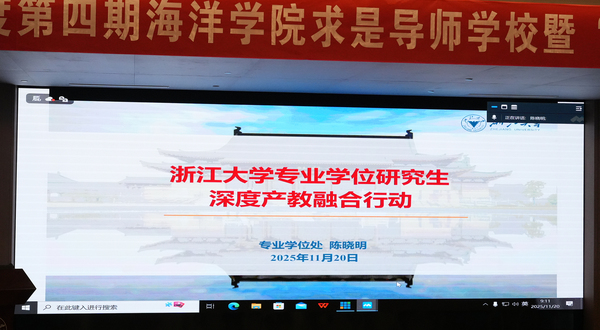
This edition of the Qiushi Mentor School featured special reports by Chen Xiaoming, Deputy Director of the Professional Degree Office at Zhejiang University's Graduate School, and Huang Fang, a full-time mental health education instructor. In his presentation titled Deepening Industry-Education Integration for Professional Degree Postgraduates, Chen systematically outlined the development trajectory and structural framework of the university's professional degree education. He elaborated on three major initiatives—deepening collaboration, enhancing quality, and institutional innovation—alongside pathways such as jointly formulating training programmes with enterprises, establishing collaborative talent cultivation bases, and implementing dual-mentor systems. Huang Fang, under the theme Decoding the Mind, Empowering Mentorship: Psychological Communication Techniques and Stress Management for Postgraduate Supervisors, addressed the psychological characteristics of postgraduate students. She imparted methods for identifying and alleviating stress, such as empathetic communication and open-ended questioning, while offering adjustment strategies across cognitive, physiological, emotional, and behavioural dimensions. She advocated for supervisors to prioritise their own mental wellbeing to foster a harmonious mentorship ecosystem.
During the exchange session, Xu Zhiwei, Head of the Department of Marine Informatics, shared practical experiences in resolving students' psychological challenges through active listening and empathy, emphasising the need for supervisors to strengthen humanistic care and lead by example in fostering a positive research environment. Lin Yinglian, Chief Engineer and Technical Expert at CNOOC Shenzhen Branch's Deepwater Engineering Construction Centre, representing industry mentors, stressed aligning university training with corporate needs. She highlighted the importance of fostering technical innovation and problem-solving capabilities among engineering postgraduates, refining university-industry collaboration mechanisms, enhancing mentor exchanges, and jointly applying for research projects to accelerate technology transfer. Hu Peng, Head of the Teaching Management Department at the ZJU Ocean College, introduced the school's initiatives to cultivate interdisciplinary professional degree talent in marine fields, closely aligned with the national strategy for a maritime power. He stressed that professional degree education must strengthen university-enterprise collaboration and implement student professional practice to advance the integration of education, research, and industry.
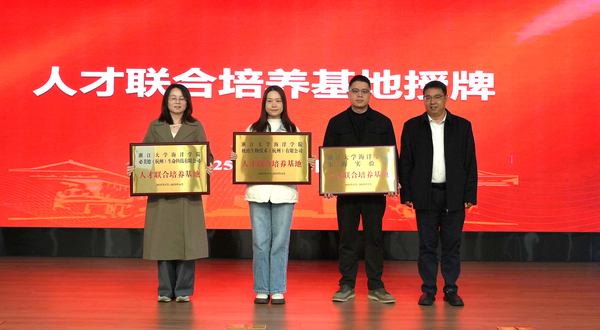
The training session featured a plaque presentation ceremony for the Joint Talent Cultivation Base and an appointment letter ceremony for industry mentors, further expanding the industry-education integration platform and deepening the collaborative education mechanism. Fu Huijun unveiled the plaque for the Joint Talent Cultivation Base, while Ye Feng, Head of Student Ideological and Political Work; Hu Peng, Head of Teaching Management; and Feng Xuehao, Head of External Exchange and Cooperation, presented appointment letters to the industry mentors respectively.
In recent years, the ZJU Ocean College has achieved notable progress in developing professional degree cultivation elements. It has received multiple honours including Ministry of Education thematic case project approval, Zhejiang University Teaching Achievement Award (First Prize), Zhejiang Province Outstanding Postgraduate Teaching Case, and Zhejiang Province Outstanding Practical Achievement. Graduates have secured positions in key institutions, with outstanding representatives such as the pilot of the Deep Sea Warrior submersible emerging from the cohort.
(Hanchun XU, Lisi ZHOU)