

NEWS
Zhejiang University Ocean College Secures APEC Funding to Lead Regional Collaboration on Marine Litter Management in Blue Carbon Ecosystems
ZHOUSHAN, CHINA –
Asia-Pacific Economic Cooperation (APEC) is a leading regional economic forum comprising 21 member economies across the Asia-Pacific region. It promotes free trade, economic cooperation, and sustainable development under its vision of ''Strong, Balanced, Secure, Sustainable, and Inclusive Growth.'' Through the APEC Support Fund (ASF), APEC finances capacity-building projects that address shared regional challenges, including environmental sustainability and marine governance.
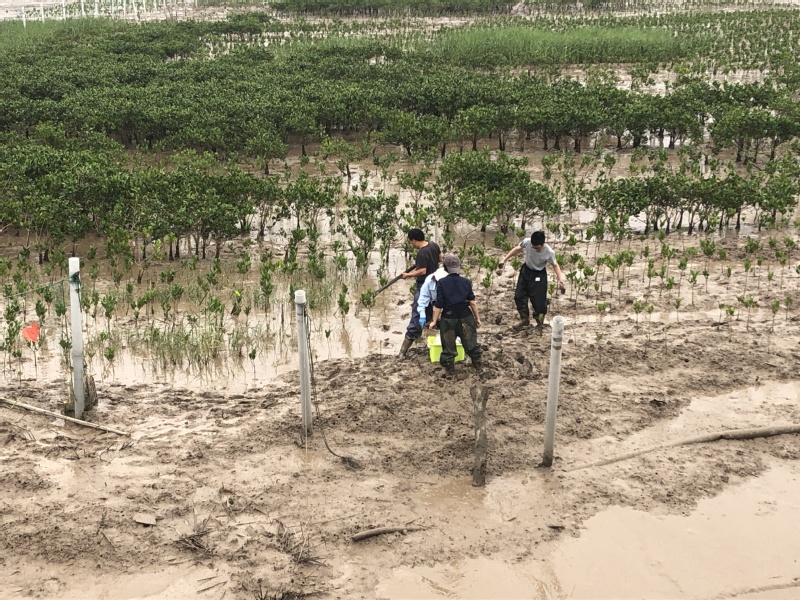
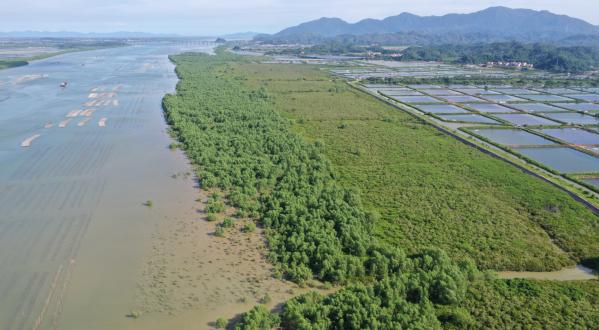
Blue carbon ecosystems—including mangroves, salt marshes, and seagrass meadows—are critical for coastal protection, fisheries productivity, biodiversity conservation, and carbon sequestration. The APEC region contains some of the world's largest and most diverse blue carbon habitats, yet it is also significantly affected by marine debris pollution. Addressing this issue is essential to safeguarding coastal livelihoods and strengthening long-term socioeconomic resilience.
In light of this matter, Associate Professor Pei Sun Loh of ZJU Ocean College, has secured a competitive grant of USD 100,000 from the APEC fund to lead a regional initiative to address problems regarding marine debris in blue carbon ecosystems, with a project titled ''Capacity building to tackle marine debris problems in blue carbon ecosystems for socioeconomic benefits and sustainable coastal zones in APEC economies''.
This project is under the APEC's Oceans and Fisheries Working Group (OFWG) forum, and is supported by the ASF Sub-fund on Marine Debris Management and Innovation (MDMI), which advances initiatives to prevent and reduce marine debris by improving the management of land- and sea-based waste sources and fostering technical and policy innovation.
Under the leadership of Project Overseer Associate Professor Pei Sun Loh and Alternate Project Overseer Professor Aijun WANG of the Third Institute of Oceanography, Ministry of Natural Resources/APEC Marine Sustainable Development Center, the initiative will enhance regional capacity to manage marine debris in these sensitive ecosystems.
“This project provides an important platform for APEC economies to exchange knowledge, share best practices, and develop coordinated strategies to reduce marine debris impacts on blue carbon ecosystems,'' said Associate Professor Loh, ''thus strengthening ecosystem resilience and ultimately supports sustainable fisheries, tourism, and the well-being of coastal communities.” Dr Loh and Professor Wang also wish to extend their gratitude to the Department of International Cooperation, Ministry of Natural Resources, China, and the China OFWG Team for their support throughout the development of the project.
The project will run from March 2026 to June 2027 and will culminate in a two-day capacity-building workshop in November 2026. The workshop will convene government officials, policymakers, and experts from across APEC economies to identify practical solutions for debris reduction, clean-up, and reuse strategies. Key outputs will include a comprehensive capacity gap analysis, the international workshop, and a final summary report outlining policy recommendations and best practices.
By aligning with the APEC Putrajaya Vision 2040, this initiative underscores Zhejiang University's leadership in marine environmental research and governance, and its commitment to advancing regional cooperation for sustainable ocean and coastal management.